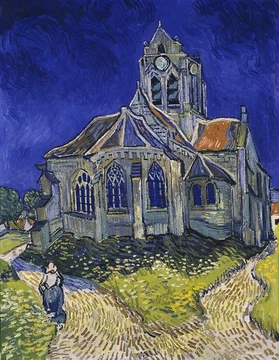
Watercolor painting
A painting method using pigments suspended in a water-based solution.

Watercolor painting is a method in which pigments suspended in a water-based solution are applied to a support, most commonly paper. It refers to both the medium and the resulting artwork. Transparency is its main characteristic, caused by the gum binder being absorbed by the paper, leaving a top layer of dispersed pigment particles. Watercolor is an ancient form of painting, with traditions in East Asia, India, Ethiopia, and Europe, and it became particularly prominent in England from the late 18th century, where it was celebrated as a distinctly English 'national art.'
- medium
- Watercolor painting
- key_characteristic
- Transparency
- common_support
- Paper (often cotton-based watercolor paper)
- earliest_known_examples
- Cave paintings of Paleolithic Europe
- associated_region
- England (especially late 18th–19th century)
Lore & Background
Watercolor art dates back to the cave paintings of Paleolithic Europe and has been used for manuscript illustration since at least Egyptian times, with particular prominence in the European Middle Ages. Its continuous history as an art medium begins with the Renaissance. The German Northern Renaissance artist Albrecht Dürer is generally considered among the earliest examples of watercolor, painting several fine botanical, wildlife, and landscape watercolors. An important school of watercolor painting in Germany was led by Hans Bol as part of the Dürer Renaissance. Despite this early start, watercolors were generally used by Baroque easel painters only for sketches, copies or cartoons.
Reader's Guide
Watercolor painting's significance lies in its long history and its development into a major independent medium, especially in England from the late 18th century. The English artists Paul Sandby, Thomas Girtin, and Joseph Mallord William Turner are credited with establishing watercolor as an independent, mature painting medium. Turner brought watercolor to the highest pitch of power and refinement, creating hundreds of historical, topographical, architectural, and mythological watercolor paintings. The medium was also vital for botanical and wildlife illustration, with artists such as John James Audubon. Watercolor's transparency and ability to summarize, clarify, and idealize in full color have made it enduringly used in scientific and museum publications.
Did You Know?
- Watercolor paint is an ancient form of painting, if not the most ancient form of art itself.
- Watercolor papers are usually cold-pressed papers that provide better texture and appearance; hot-pressed paper has a smoother texture.
- The German Northern Renaissance artist Albrecht Dürer is generally considered among the earliest examples of watercolor.
Frequently Asked Questions
What exactly is watercolor painting as a medium?
Watercolor painting is a technique in which finely ground pigments are mixed into a water-based solution and brushed onto a surface, most often paper. The name covers both the process of applying those washes and the finished artwork that results.
What is the defining visual characteristic of watercolor?
Transparency is what sets watercolor apart from most other painting methods. As the gum binder soaks into the paper fibers, a thin film of loose pigment particles remains on top, letting light pass through and giving the image its luminous, layered quality.
How old is watercolor painting and where did it first appear?
The practice stretches back to the cave paintings of Paleolithic Europe, making it one of the oldest known painting traditions. Parallel traditions also developed independently in East Asia, India, and Ethiopia over many centuries.
Why is England so strongly linked to watercolor?
From the late 1700s onward, English artists and patrons elevated watercolor to the status of a distinct national art form. That period of intense experimentation and exhibition cemented England's reputation as the medium's most celebrated home.
What surface do watercolor artists typically paint on?
The standard support is paper, frequently a cotton-based watercolor paper chosen for its ability to absorb the water and binder without warping. The paper's tooth and absorbency directly influence how the transparent pigment layers settle and dry.
More in Visual Arts And Artworks 1-16
Spotted an error? Know more?
This is a living reference — every entry is fact-audited, and reader corrections feed straight into our audit queue. Suggest an edit · See this site's audit record